Odenton housing stock gives wasps very specific real estate. Paper wasps build flat, open-comb nests under the covered front entries and second-story overhangs common in Piney Orchard and Seven Oaks townhome rows,…
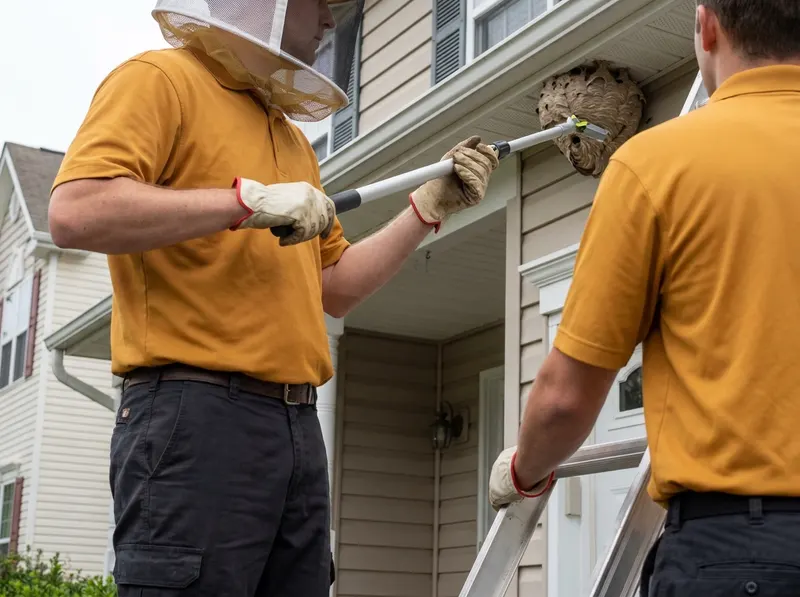
Odenton housing stock gives wasps very specific real estate. Paper wasps build flat, open-comb nests under the covered front entries and second-story overhangs common in Piney Orchard and Seven Oaks townhome rows, often within arm's reach of the doorbell. Bald-faced hornets prefer the pine and hardwood edges near Piney Orchard Nature Preserve and the tree lines behind Chapel Grove, hanging gray football-shaped nests 8 to 25 feet up. Ground yellowjackets take over old rodent burrows and mulch beds — we see them along the newer landscaped berms in Two Rivers and Villages at Two Rivers, and in the segmental retaining walls that back a lot of Patuxent Ridge and Riverside Woods lots. In the Little Patuxent River corridor and the older wooded stretches off Conway Village, European hornets show up around porch lights after dark and get mistaken for the smaller yellowjacket.
Decide between nest removal and a broader perimeter program by counting nests and asking what the yard does for a living. One nest by a door, one gray nest in a shrub, one hole in the lawn — that is a removal call, and a single visit is the honest answer. We do not sell a recurring contract to solve a one-off wasp nest. When a property produces four or five nests every June across soffits, deck framing and shed eaves, the driver is usually structural — open J-channel behind vinyl siding, unscreened gable vents, gaps at the fascia return — and treatment plus sealing beats repeat knockdowns. Families near Fort Meade working a PCS timeline or a rental walkthrough usually want the removal done and documented, not an ongoing plan, and that request is easy to honor.
Timing matters in Maryland. Queens start small nests in April and May, when a colony may hold a dozen insects and comes down quickly. By late July through September, a yellowjacket colony can hold thousands and defends aggressively — that is when kids on backyard playsets, weekend grillers and homeowners pulling trash cans out for pickup get stung. Nests die naturally after a hard frost and are not reused, so a gray shell still hanging in a maple in December needs no treatment at all; we will tell you that on the phone instead of billing for it. Second-story and roofline work is limited to what a ladder can safely reach — no bucket truck, no roof walking in wet or windy weather.
What happens on site is deliberately plain. We show you the nest and name the insect, treat the entrance so returning workers spread the product into the colony, and note the product used and any re-treatment terms before leaving. Aerial and eave nests are bagged and taken with us; comb removed from under a porch ceiling leaves a residue mark that scrubs off. Ground nests get the burrow treated and flagged, and we ask you to keep pets off the spot for the rest of the day. Interior rooms are never fogged — if yellowjackets are chewing through drywall into a bedroom, the fix is treating the exterior entry point and sealing it, not spraying living space. Callbacks on wall-void colonies happen; the terms are stated up front rather than left vague.
Every job gets a firm, written price after a free on-site visit.
Tell us about your wasp and hornet nest removal job in Odenton and we'll send a clear, written quote — usually the same day.
 Kavexa Pest Defense